Circumcision may be recommended for conditions such as tight foreskin (phimosis), recurrent balan…
Circumcision may be recommended for conditions such as tight foreskin (phimosis), recurrent balanitis, painful or difficult retraction of the foreskin, recurrent infections, or certain hygiene-related problems. Some men may also choose circumcision for personal reasons.
How is stapler circumcision performed?
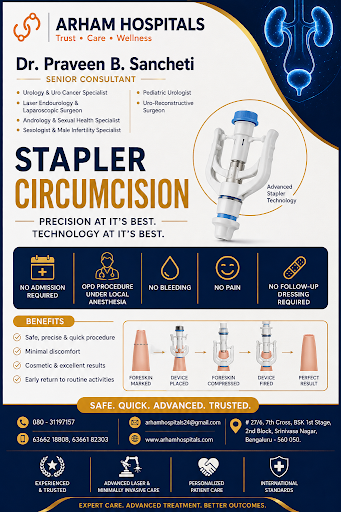
The procedure is generally performed under local or appropriate anesthesia. The stapling device is positioned around the foreskin, and the excess foreskin is removed while the device places a circular row of small staples to approximate the skin edges. The procedure usually takes less time than conventional surgical circumcision.
Potential advantages
- Quick procedure
- Precise and uniform removal of foreskin
- Simultaneous cutting and stapling
- Usually minimal bleeding
- Small, neat circumferential wound
- Often performed as a day-care procedure
- Faster return to routine activities in many patients
The staples generally separate or are removed as the wound heals, depending on the device used.
Recovery
Mild swelling, bruising, tightness, or discomfort may occur during the initial recovery period.