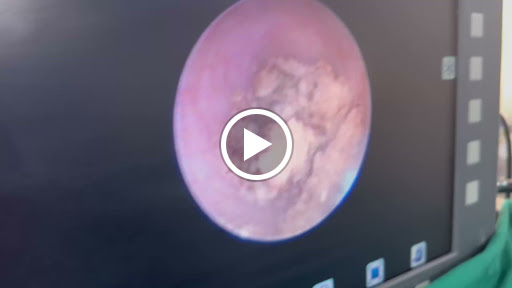
Kidney stones are hard deposits that form inside the kidneys when certain minerals and salts in u…
Kidney stones are hard deposits that form inside the kidneys when certain minerals and salts in urine become concentrated and crystallize. Small stones may pass naturally, but larger stones or stones causing pain, obstruction, infection, or kidney damage may require treatment.
One of the important modern treatments is laser stone surgery, a minimally invasive technique used to break kidney or ureteric stones into tiny fragments or dust so they can be removed or passed naturally.
What Is Kidney Laser Stone Surgery?
Kidney laser stone surgery is usually performed through the natural urinary passage, without making a cut in the skin.
A thin camera called a ureteroscope is introduced through the urethra and bladder into the ureter and, when required, into the kidney. Once the stone is identified, a fine laser fibre is used to fragment it into small pieces or dust.
The fragments can then be removed using miniature instruments or allowed to pass naturally, depending on their size and clinical situation.
One commonly used procedure is RIRS — Retrograde Intrarenal Surgery. RIRS allows the surgeon to reach stones located within different parts of the kidney using a flexible ureteroscope.